How Does Starke Mildew Clean Work? The No-Scrub Mold Remover Explained
March 13, 2026
TL;DR: Starke Mildew Clean is a powerful spray-on mold and mildew remover that works without any scrubbing. Spray it onto a cool, shaded surface, let it soak, and the formula breaks down mold and mildew at a chemical level. It's safe for vinyl cushions, boat tops, canvas, rubber fenders, fiberglass, and more. In Antigua's year-round heat and humidity, mold is a constant threat. Starke Mildew Clean is the product built to handle it.
You know the feeling. You pull back the cover after a few days away and there it is. Black spots. That unmistakable musty smell. Mold has moved in and made itself comfortable.
Mold and mildew need just three things to thrive: moisture, warmth, and organic material. Boats provide all three in abundance. In Antigua, add in tropical humidity, a year-round sailing season, and zero cold months to slow fungal growth down, and you've got conditions that are genuinely relentless.
Most boat owners reach for bleach when they see mold. That's a mistake. Bleach damages the surfaces you're trying to save, and in the Caribbean sun, it makes things significantly worse. The right tool is Starke Mildew Clean, a formula built specifically for marine surfaces that removes mold and mildew without scrubbing, without damaging your vinyl, and without the risks that come with harsh household chemicals.
This post explains exactly how it works, where to use it, and how to get the best results on your boat.
What Does Starke Mildew Clean Actually Do?
Starke Mildew Clean is a concentrated mold and mildew formula that penetrates surface-level growth and breaks it down chemically. You spray it on, let it soak into the affected area, and the mold disappears. No scrubbing, no hard work, no risk of damaging the surfaces underneath.
The active chemistry works the same way professional mold removers do. Sodium hypochlorite, a powerful oxidizing agent, kills mold and mildew by attacking lipids in their cell walls, inactivating essential enzymes, and destroying cellular components. The formula doesn't just bleach the surface appearance. It attacks the mold itself, breaking it down so it can be rinsed or wiped away.
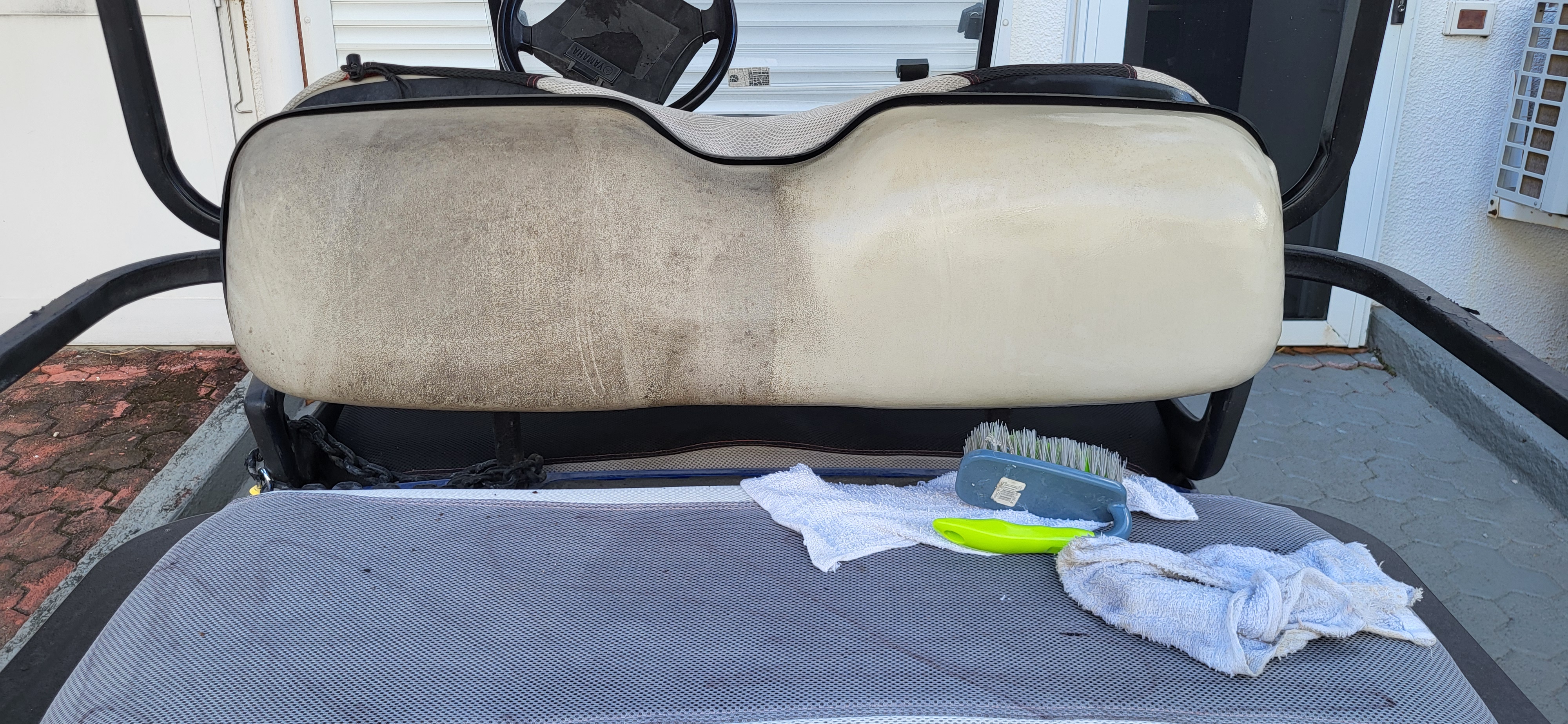
Verified buyers who've used Starke Mildew Clean report mildew disappearing in under three minutes on heavily affected surfaces. One customer described vinyl seats that looked like they needed replacement being restored to like-new condition after a single application. That's the power of dwell time done right: the product does the work while you wait.
It's safe to use on vinyl cushions, boat tops, canopies, chairs, rubber fenders, fiberglass, tile, grout, and more. Basically anything on your boat that carries mold or mildew is in play. One bottle handles the whole vessel.
Why Mold and Mildew Hit Antigua Boats So Hard
Mold doesn't care that your boat looks clean. It doesn't care that you rinsed it after the last sail. Even well-ventilated, well-maintained boats get mold, because the spores are virtually everywhere and all they need to grow is moisture, warmth, and any organic material. That includes vinyl, canvas, Dacron, and even the film of salt residue left on a hull.
In temperate climates, winter gives boat owners a natural break. Cold slows mold growth significantly. In Antigua, there is no such break. Mold can grow on a boat every single day in warm, humid conditions, because heat and moisture are the two factors it needs most. Antigua delivers both, every month of the year.
Covered boats are actually especially vulnerable. Dark, stagnant air inside a boat with hatches closed and covers on creates exactly the environment mold craves: no light, trapped humidity, and organic surfaces to feed on. Anchor lockers, cockpit seat storage, Bimini folds, and cushion undersides are the spots that get hit first.
Mold spores can survive for years and reactivate the moment conditions improve for them. A boat that looks clean in December can be covered in visible mold by January if moisture got in. This is why regular treatment with the right products isn't optional for Caribbean boat owners. It's essential maintenance.
Learn how the full Starke product lineup can help you stay on top of it.
Why Bleach Is the Wrong Tool for Marine Surfaces
Bleach damages marine vinyl in ways that aren't always visible at first. It strips the oils that keep vinyl flexible, deteriorates the stitching that holds your seats together, and removes UV protection from surfaces that already take a beating from the Caribbean sun. For marine surfaces, bleach causes more long-term damage than the mold it removes.
This isn't theory. In a real-world test documented by Boating Magazine, a cushion treated with bleach showed significantly less supple vinyl, visible stitching deterioration, and a return of mildew with a vengeance within one year. The bleach removed the stain. It also removed the seat's ability to resist the next round of mold growth.
Here's what's happening at a material level. Bleach attacks the plasticizers in vinyl, which is what keeps it soft and pliable. It weakens and rots stitching threads. And it instantly strips any UV protectant on the surface. In the Caribbean, where your boat sits in intense UV exposure every day, stripping that protection is a serious problem.
The detrimental effects get even worse when you combine bleach with sunlight. The threads that hold vinyl seat cushions together weaken and eventually disintegrate under that combination. And Simple Green, one of the most widely trusted cleaning brands, specifically advises against bleach on marine vinyl for exactly this reason.
Starke Mildew Clean removes mold without any of these risks. It's formulated for marine surfaces. The chemistry is targeted. Your vinyl stays intact.
How Do You Apply Starke Mildew Clean? Step-by-Step
Starke Mildew Clean works by soaking into mold-affected areas, not by scrubbing. Ensure the surface is cool and out of direct sunlight. Spray a generous amount directly onto the area. Let it sit for a few minutes and watch the mold disappear. For heavily affected areas or delicate materials, rinse with water or wipe gently with a damp microfiber cloth when done.
Here's the full application process from Starke Yacht Care's official product documentation:
Step 1: Check your conditions. The surface must be cool to the touch. Never apply Mildew Clean in direct sunlight. Heat causes the formula to evaporate too quickly before it can work, and applying it to a hot surface reduces effectiveness significantly.
Step 2: Spray generously. Apply a liberal amount directly onto the affected area. Don't be light-handed. You want even coverage over all the mold or mildew, including any seams or creases where growth tends to hide. Those tight spots are exactly where mildew starts.
Step 3: Let it soak. This is where the product does its work. Allow it to sit for a few minutes. Watch the mold begin to disappear. Don't scrub during this phase. Trust the chemistry.
Step 4: Rinse or wipe as needed. For most surfaces, the mold will simply be gone. For heavily affected areas or more delicate materials like Bimini canvas, rinse with fresh water or wipe gently with a clean damp microfiber cloth.
Step 5: Repeat if needed. Severe or deep mildew staining may need a second application. Apply again, let it soak, and rinse.
You can also watch how our products work before you start for extra confidence.
Where Can You Use Starke Mildew Clean on Your Boat?
One of the most practical things about Mildew Clean is that it handles almost everything on your vessel. You don't need a different product for each surface.
Here's where it works:
Vinyl cushions and seating. This is the most common battleground on any Antigua-based boat. Cockpit seats, helm chairs, salon cushions. Spray, soak, done.
Boat tops, canopies, and Biminis. Canvas surfaces are prime real estate for mildew. Mildew Clean is safe on all of them.
Rubber fenders. Fenders pick up mold fast. They're constantly wet, often stored in lockers, and get little attention. Mildew Clean handles them without any issue.
Fiberglass surfaces. Hull sides, fiberglass deck areas, and lockers all respond well to Mildew Clean.
Tile, grout, sinks, and counters. Heads and galleys are classic mold zones on liveaboards. Mildew Clean works here too.
For water spots and rust staining on metal surfaces, add Starke Venom water spot remover to your kit as a companion product. Together they cover the two most common surface problems Caribbean boat owners deal with.
The areas on Antigua-based boats that tend to need the most attention are anchor lockers, the undersides of seat cushions, cockpit coaming pads, and the folds of any stored canvas. Check these first after any period the boat has sat closed up.
Does Starke Mildew Clean Prevent Mold from Coming Back?
Starke Mildew Clean is a cleaner, not a preventer. It removes existing mold and mildew quickly and effectively. Once the surface is clean, the mold is gone. But without addressing the conditions that caused it, mold spores in the air will find their way back.
Mold returns when moisture returns. Mold and mildew form wherever moisture, warmth, and still air combine, and on a boat, those conditions can come back after a single rainy night or a morning with hatches closed. Cleaning is the cure. Ventilation and protection are the prevention.
Here's the routine that works for boats in Antigua:
Use Mildew Clean when you see growth. Spray it on, let it do its job, and the surface is clean. Don't delay. Fresh mildew is much easier to treat than growth that has had weeks to dig in.
Keep air moving. Open hatches and lockers whenever possible while docked. Solar vents are a worthwhile investment for any boat that sits closed for days at a time.
Dry surfaces before covering. Never cover a wet boat. Let cushions and canvas air out before you close everything up.
Follow up with a mold preventer. For long-term protection on vinyl and fabric surfaces, pair Mildew Clean with the Xanigo Mold and Mildew Preventer available at Antigua Marine Solutions. One handles what's already there. The other keeps it from coming back for up to 90 days.
Think of it as a two-step system: remove with Mildew Clean, then protect with Xanigo. Together, they're the most effective approach to staying ahead of mold in a tropical climate.
Conclusion
Three things to take away from this guide.
First, Starke Mildew Clean removes mold and mildew without scrubbing. The chemistry does the work. You spray it on, let it soak, and the mold disappears. It's that straightforward.
Second, never use bleach on marine vinyl. It removes the stain and damages the surface at the same time. In the Caribbean sun, that damage accelerates quickly. Use a product built for marine surfaces.
Third, in Antigua's tropical climate, mold isn't a seasonal problem. It's a year-round one. Having Mildew Clean in your detailing kit means you're always ready to deal with it fast, before it has a chance to dig in.
Your boat is your investment. Protect it with products that work as hard as you do.
Frequently Asked Questions
Can I use Starke Mildew Clean in direct sunlight?
No. Starke Mildew Clean should never be applied to a surface that is warm or in direct sunlight. Heat causes the formula to evaporate before it can penetrate and work effectively. Always choose a shaded area or apply during the cooler parts of the day. Early morning is ideal in Antigua, when surface temperatures are lowest and the sun hasn't yet had time to heat up your hull and cushions.
Do I need to scrub after applying Starke Mildew Clean?
In most cases, no. The formula is designed to break down mold and mildew without any scrubbing. Simply spray a generous amount onto the affected surface, let it soak, and the mold will disappear on its own. For very stubborn, deep-set staining, a light wipe with a damp microfiber cloth after the dwell time can help clear residue. But you shouldn't need to scrub, which also protects your surfaces from unnecessary abrasion.
Is Starke Mildew Clean safe for colored vinyl and canvas?
Yes. Starke Mildew Clean is formulated to be safe on boat tops, vinyl cushions, chairs, canopies, and rubber fenders. As with any cleaning product, testing on a small, inconspicuous area first is a sensible precaution, especially on older or heavily faded vinyl. The official Starke product guidance confirms it is safe across all these marine surfaces. Avoid harsh bleach-based alternatives, which deteriorate stitching and strip UV protection from marine vinyl.
How long should I let Starke Mildew Clean soak before wiping?
A few minutes is generally all you need for light to moderate mildew. Let the product sit on the surface and you'll see the mold begin to disappear as it soaks. For heavier growth, allow more dwell time before rinsing or wiping. The key is to be patient and let the formula do the work rather than wiping too soon. Always rinse with fresh water or wipe with a clean microfiber cloth afterward on delicate surfaces.
Can Starke Mildew Clean be used on rubber fenders and fiberglass?
Yes. Starke Mildew Clean is safe for use on rubber fenders, fiberglass, as well as tile, grout, sinks, and counters, in addition to all standard marine soft surfaces. Rubber fenders are one of the most overlooked mold zones on a boat, since they're frequently stored wet in lockers with poor ventilation. A regular application of Mildew Clean on your fenders after storage is a simple habit that keeps them clean and extends their life.
Featured Product
Starke Mildew Clean